Editorial Disclaimer: Please note that this is NOT a guide with any opinions or statements. We do not use affiliate links in this post, and we do not make commissions from any of the products suggested below. Our goal is just to help you find the best developmental toys for your toddlers – honest, research backed, zero monetary motivation behind the recommendation.
Toddlers between 1 and 3 are like miniature sponges, soaking up the world around them at an awe-inspiring rate. Their brains are building connections for language, movement and social skills quicker than at almost any time in their lives. Watching them wobble into their first steps or babble their first recognizable words is one of the purest joys of being a parent – but it also means the constant struggle to find toys that actually keep pace with their whirlwind of curiosity without overwhelming them, not to mention your wallet or your living room floor.
If you’re looking for the best present for a 1-year-old hitting major milestones, or engaging toys for your older toddlers that stimulate imagination while developing key skills, then you’ve come to exactly the right place. This guide breaks it all down by age group and developmental goal, as well as by playing style – so you can shop with real confidence and not guesswork.

best developmental toys for toddlers aged 1 to 3, carefully
chosen to support every stage of early growth and learning.
- Why Developmental Toys Matter for Toddlers (Ages 1–3)
- The Best Gifts for 1-Year-Olds: First Birthday Favorites
- Top Engaging Gifts for 2-Year-Olds: Curious Explorers
- Top Engaging Gifts for 3-Year-Olds: Active Imaginations
- Complete Comparison: Top 10 Toddler Developmental Toys at a Glance
- Choosing by Developmental Goal: Quick Reference Guide
- Frequently Asked Questions About Toddler Gifts
- Conclusion
Why Developmental Toys Matter for Toddlers (Ages 1–3)
Play isn’t just fun for toddlers – it is their job, and the job is to create all the aspects of the way they grow, from the development of their brains to the coordination of their bodies. Understanding why some toys work helps you make better choices that aren’t based on flashy packaging and five-star reviews.
How Play Shapes Toddler Development?
| Developmental Area | What’s Happening at Ages 1–3 | Best Toy Types to Support It |
|---|---|---|
| Cognitive Skills | Problem-solving, pattern recognition, cause and effect learning forming quickly | Puzzles, shape sorters, stacking toys |
| Fine Motor Skills | Grasping, Pinching, Stacking, Manipulating small objects improving on a weekly basis | Knob puzzles, building blocks, play-dough |
| Gross Motor Skills | Standing, cruising, walking, running, climbing – all emerging or perfecting | Push walkers, balance bikes, activity tables |
| Language Development | First words at 12 months, two word phrases at 24 months, sentences at 36 months | Soft books, interactive toys with audio cues |
| Social & Emotional | Learning frustration tolerance/confidence through repetition/early empathy | Pretend play sets, cooperative building toys |
| Sensory Exploration | Touching, mouthing, shaking, squeezing to learn about the physical world | Textured books, sensory bins, musical instruments |
The Three Developmental Stages Within the Toddler Years
Understanding how dramatically toddlers change between 1 and 3 is essential if you are going to spend a single dollar on toys:
| Age Stage | Dominant Play Style | What They’re Learning | What to Avoid |
|---|---|---|---|
| 12–18 Months | Sensory and exploratory – touch, taste, shake, drop | Object permanence, texture, basic cause-and-effect | Small parts, complex instructions, competitive play |
| 18–24 Months | Parallel play — playing next to others, not with other people | Imitation, vocabulary explosion, physical confidence | Toys requiring sharing or turn-taking |
| 24–36 Months | Pretend and cooperative – imagining situations, early cooperative | Role Play, Sequencing, Spatial Reasoning | Overly rigid, one-solution-only toys |
The beauty of going for the well-chosen option is in the progression. A toy that challenges a 1-year-old just enough – but does not overwhelm them – builds the exact confidence and curiosity that is the gateway to more complex play at 2 and 3. It is not a matter of flash or price tags for choosing the right ones. It’s about finding a way to fuel that inner explorer sustainably. You May Also Like – The Ultimate Age-by-Age Gift Guide for Kids & Teens (2026 Edition).
The Best Gifts for 1-Year-Olds: First Birthday Favorites
Turning one is a milepost explosion – first words, tentative steps, endless curiosity about textures and sounds. The best gifts at this stage focus on safety first (no small parts, no sharp edges, no detachable parts), while focusing on gross motor leaps such as standing and cruising in addition to sensory experiences that focus on developing senses without requiring screens.
What to Look for in Gifts for 1-Year-Olds
| Priority | Why It Matters | What to Check |
|---|---|---|
| Safety First | Everything gets into the mouth at this age | No parts smaller than 1.75 inches, non toxic materials, rounded edges |
| Durability | These toys get thrown, chewed and dropped constantly | Solid wood, BPA free hard plastic, reinforced fabric stitching |
| Sensory Engagement | Tactile and auditory stimulation serves learning at 12 months | Different textures, different colors, crinkle sounds |
| Gross Motor Support | Walking milestones peak at 9-15 months | Push-along features, stable bases, appropriate weight |
| Simplicity | Average attention spans are 2-5 minutes at this age | 3-5 pieces max, solitary clear actions, instant reward |
Push Toys for Early Walkers
VTech Sit-to-Stand Learning Walker
Encouraging those first shaky steps requires a toy that provides a physical boost of confidence as well as sufficient engaging distraction to encourage a toddler to keep moving. The VTech Sit-to-Stand Learning Walker delivers on both fronts in an impressive way for a toy for this price.
This sturdy unit doubles as a sit down activity center in its early life, transitioning seamlessly into a push walker as your child gains the leg strength to cruise. Colorful interactive buttons introduce animals, numbers, and simple songs and a drop-and-roll ball ramp celebrates reaching and grabbing motions that build fine motor precision at the same time.

Parents consistently point out its durability on several different flooring materials such as outdoors in the grass, and the machine supports the weight of a 10-month-old without wobbling or tipping. At around 6 pounds, it’s not too much to push with small arms without frustration – which is an enormous issue when you’re 11 months old and easily defeated.
| Spec | Detail |
|---|---|
| Best Age | 9 months – 2 years |
| Weight | ~6 lbs |
| Key Features | Interactive activity panel, push handle, ball ramp, songs |
| Skills Developed | Balance, gross motor, early numeracy and animal vocabulary |
| Safety | No small parts, stable wide base, non-toxic materials |
| Approx. Price | ~$35–$45 |
| Buy Link | View on Amazon |
Tactile and Sensory Exploration
Fat Brain Toys InnyBin
Most shape sorters at this age require children to put things in – which is developmentally appropriate but quickly mastered and abandoned. The Fat Brain Toys InnyBin turns this all on it’s head by creating an environment where children get to pull chunky textured blocks out of a colourful bin and then explore them as they like before they begin again.
This reversal is simple-sounding, but developmentally, it is genius: Pulling requires different grip strength and coordination than pushing, and the absence of a “correct answer” lowers frustration levels and increases engagement exponentially. The blocks are themselves in varied textures that encourage tactile exploration, double as rattles and are sized just right for little fists.
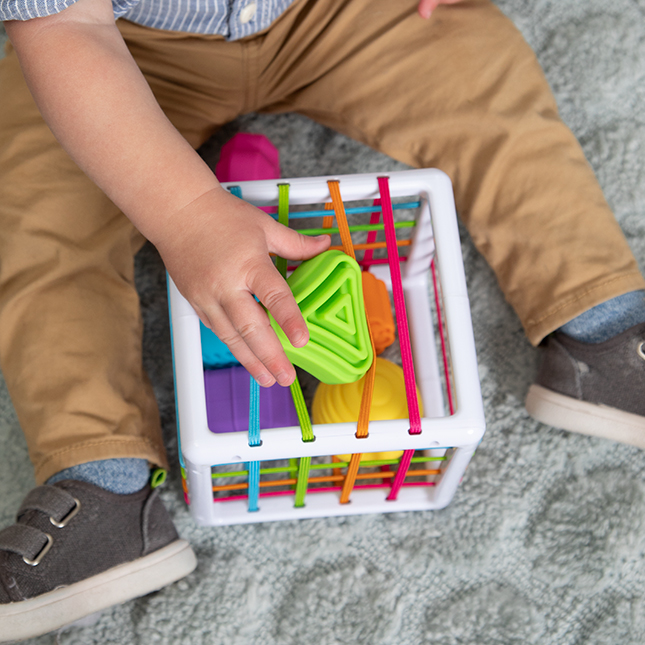
It received a STEAM Toy of the Year finalist distinction for good reason – the level of replay value is exceptional, no batteries are needed, and kids as young as 5 months old all the way through the toddler years will enjoy it.
| Spec | Detail |
|---|---|
| Best Age | 6 months – 2 years |
| Material | Cool soft plastic, no sharp edges |
| Key Features | Textured pull-out blocks, doubles as rattle, vibrant colors |
| Skills Developed | Fine motor grasping, tactile discrimination, object exploration |
| Battery Required | No |
| Approx. Price | ~$30–$40 |
| Buy Link | View on Fat Brain Toys |
Jellycat Soft Cloth Books
For on-the-go sensory play, Jellycat Soft Cloth Books, especially the popular Farm Tails and Sea Tails titles, combine a beautifully designed mix of crinkle noises, velcro tabs, fluffy textures and bold color contrast that engages the minds of 1-year-olds in surprisingly long stretches of attention span.
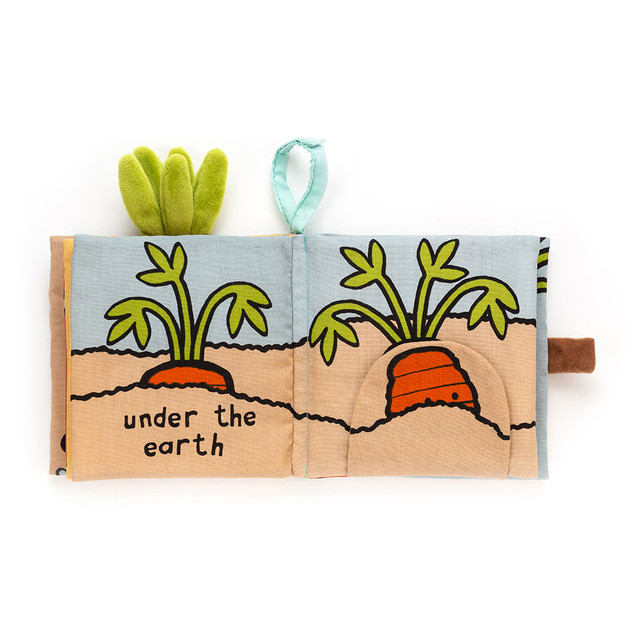
Beyond the simple sensory experience, these books introduce the idea that pages turn, the pictures are real things, and looking at a book is a nice, quiet experience – the basis of early literacy that is built entirely on tactile joy rather than formal instruction.
| Spec | Detail |
|---|---|
| Best Age | 0 months – 18 months |
| Material | Soft fabric, fully washable |
| Key Features | Crinkle pages, velcro loops, fluffy tails, bold colors |
| Skills Developed | Early literacy foundation, tactile exploration, visual tracking |
| Washable | Yes — fully machine washable |
| Approx. Price | ~$15–$20 |
| Buy Link | View on Jellycat |
Early Problem Solving
Melissa & Doug First Play Wooden Jumbo Knob Puzzle
Puzzles at 1 year of age really need to be extremely different from those at 4 years of age. The Melissa & Doug First Play Wooden Jumbo Knob Puzzle gets this exactly right: oversized wooden knobs made to be perfectly sized for small fists, chunky pieces made in only 3-5 shapes (animals, vehicles or basic shapes), and a satisfying reveal of matching pictures underneath each piece when they are removed.
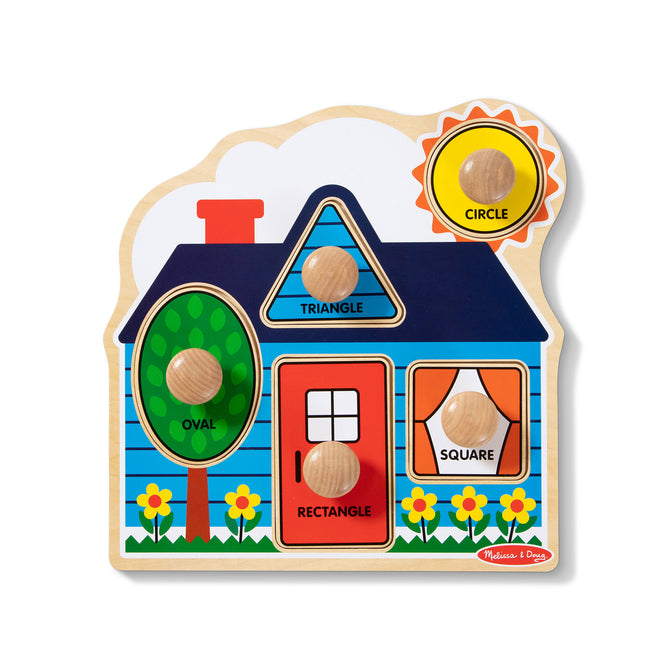
The knob grip in particular develops the pincer grasp that children this age are functionally developing – the same motion that later will allow writing, buttoning clothes, and using utensils. The solid wood construction gives it an heirloom quality that cheap plastic alternatives simply cannot match and the vibrant colors hold attention without any electronic assistance.
| Spec | Detail |
|---|---|
| Best Age | 12 months – 3 years |
| Material | Solid wood, non-toxic paint |
| Piece Count | 3–5 jumbo knob pieces |
| Key Features | Oversized grippable knobs, matching picture underneath each piece |
| Skills Developed | Hand-eye coordination, shape recognition, fine motor pincer grasp |
| Approx. Price | ~$12–$18 |
| Buy Link | View on Melissa & Doug |
Top Engaging Gifts for 2-Year-Olds: Curious Explorers
By age 2, your toddler has transformed into a full-on explorer – zipping around with surprising speed, stringing two and three words into sentences – and testing “what if?” with everything they can get their hands on Vocabulary is exploding at the rate of several new words a day and pretend play is starting in earnest as they imitate everything they see adults doing.
Gifts for this stage should turn up the cause and effect dial, support the language rush and introduce the early pretend scenarios – all while continuing to build the physical dexterity to create every “I did it!” moment of a real developmental milestone.
What to Look for in Gifts for 2-Year-Olds
| Priority | Why It Matters | What to Look For |
|---|---|---|
| Cause-and-Effect | 2-year-olds are experimenting constantly with “if I do X, then Y happens” | Toys with clear, immediate, and satisfying responses |
| Language Support | Vocabulary is exploding — toys can accelerate this | Audio cues, naming games, color/number references |
| Pretend Play | Role-play begins here and is critical for emotional development | Toy kitchens, carts, tool sets, doctor kits |
| Physical Challenge | Gross motor is more advanced — they need bigger challenges | Ride-on toys, climbing, multi-step physical tasks |
| Frustration Tolerance | Attention spans growing but still short — frustration threshold low | Toys that offer quick wins alongside gentle challenges |
Introduction to Pretend Play
LeapFrog Scoop & Learn Ice Cream Cart
Pretend play at age 2 is likely to revolve around imitating adult service roles – cooking, serving, shopping, cleaning. The LeapFrog Scoop & Learn Ice Cream Cart appeals straight to this instinct with a wheeled cart that allows toddlers to scoop colorful ice cream flavors with a magic wand, ring a service bell for incoming ice cream orders, and “read” order cards to fill requests in the proper order.
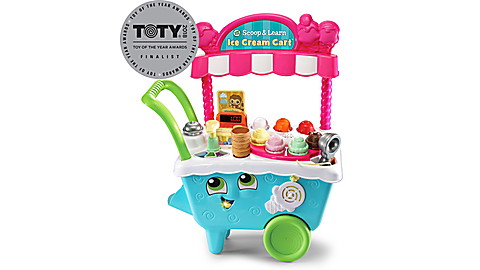
Beyond the obvious entertainment value, the sequencing element – read the order, find the right flavor, scoop, serve – brings in a whole host of early memory and planning skills that are genuinely sophisticated for this age group. The cart folds down for storage, requires minimal battery consumption for basic play and reliably creates long sustained imaginative play which parents report goes far beyond initial expectations.
| Spec | Detail |
|---|---|
| Best Age | 18 months – 4 years |
| Key Features | Magic wand scooper, service bell, order cards, foldable for storage |
| Skills Developed | Pretend play, color recognition, early sequencing, memory |
| Interactive Elements | Songs about colors and counting, bell sound effects |
| Battery Required | Yes (for lights and sounds) |
| Approx. Price | ~$35–$50 |
| Buy Link | View on LeapFrog |
Building and Stacking
Mega Bloks First Builders Big Building Bag
Spatial reasoning rapidly develops at 18-36 months and one of the most effective ways to speed it up is through hands-on building. The Mega Bloks First Builders Big Building Bag offers 80 oversized interlocking blocks in 10 shapes and 9 colors – enough variety to allow the child to be creative without too much of an intimidating building set.
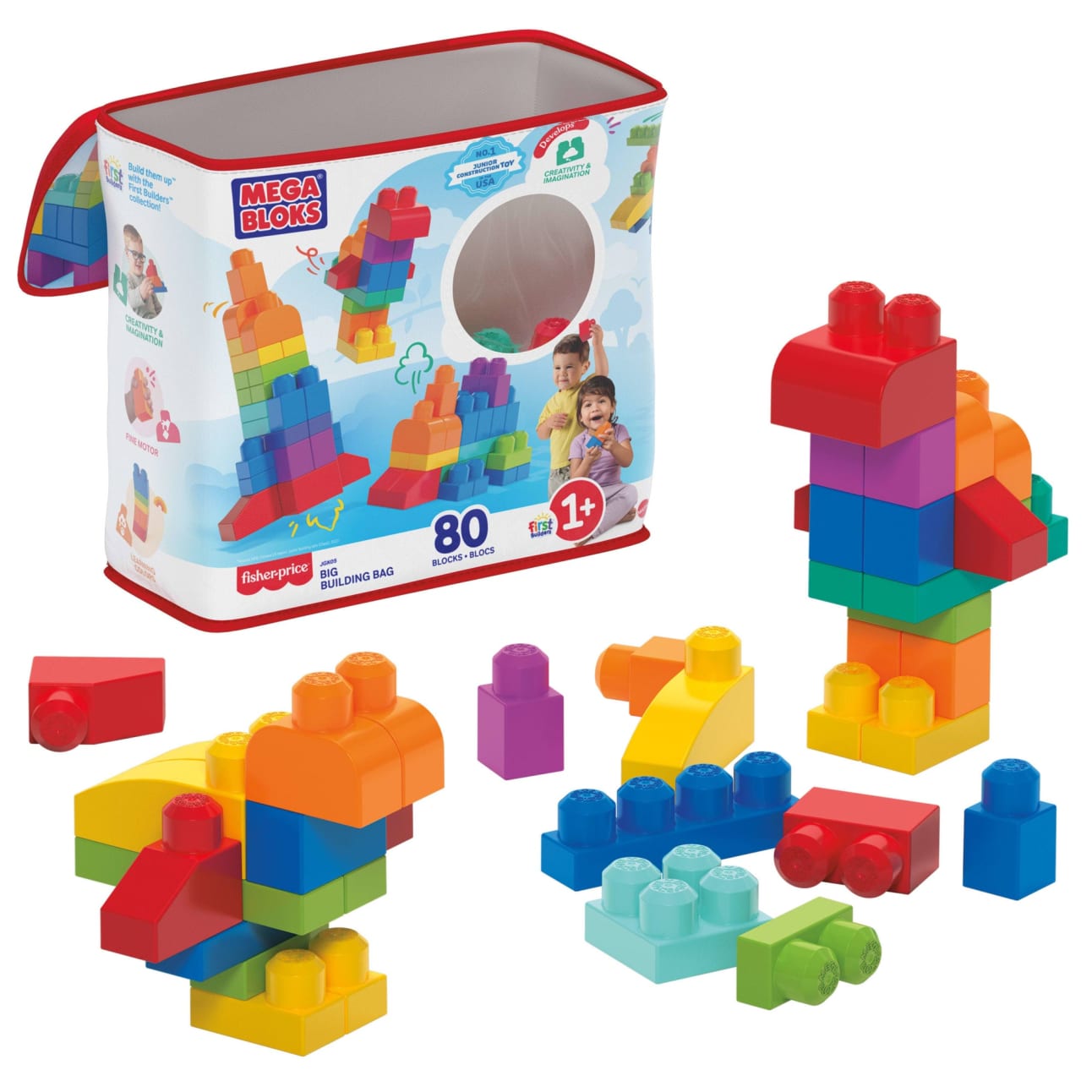
The blocks are designed with particular sizes and shapes in mind for 2 year old hands: Large enough to be easily grasped by a 2 year old, yet lightweight enough to be stacked without physical frustration, and designed to snap together with satisfying firmness, and pull apart without adult assistance. The included tote bag teaches an important secondary skill – cleaning up and sorting – without making it seem like a chore.
| Spec | Detail |
|---|---|
| Best Age | 12 months – 5 years |
| Piece Count | 80 blocks |
| Colors Available | 9 colors |
| Shapes | 10 distinct shapes |
| Key Features | Included tote bag, oversized grippable blocks, bright colors |
| Skills Developed | Spatial reasoning, fine motor, color sorting, imaginative construction |
| Approx. Price | ~$20–$30 |
| Buy Link | View on Mattel Shop |
Musical Discovery
Hape Pound & Tap Bench with Slide-Out Xylophone
The Hape Pound & Tap Bench gets its place on every serious toddler gift list thanks to a cleverly deceptive two-in-one design. In bench mode, children hammer wooden balls down a ramp and watch them strike xylophone notes as they pass through- a perfect cause and effect reward of both gross motor pounding and auditory reward. Slide the xylophone free of its housing, and it becomes a complete instrument for direct playing and melody exploration.

No batteries, no screen, no electronic shortcuts – just good old-fashioned FSC-certified wood, water-based finishes that are safe for children and a design that truly progresses from pounding on it at age 1 to making purposeful melodies on it at age 3. Parents repeatedly reinforce the point that it keeps attention for years instead of weeks.
| Spec | Detail |
|---|---|
| Best Age | 12 months – 4 years |
| Material | FSC-certified wood, child-safe water-based paint |
| Key Features | Hammer-triggered xylophone, slide-out standalone xylophone |
| Skills Developed | Cause-and-effect, rhythm, hand-eye coordination, early music exploration |
| Battery Required | No |
| Approx. Price | ~$30–$40 |
| Buy Link | View on Amazon |
Top Engaging Gifts for 3-Year-Olds: Active Imaginations
Three-year-olds are a category entirely their own – explosive energy dynamos with complex internal stories, surprisingly precise physical coordination and a real appetite for open-ended challenges that don’t come with one correct answer. Attention spans have increased significantly. Play sessions that lasted 5 minutes at the age of one now lengthen to 20-30 minutes of concentrated attention when the toy is just right.
Gifts for this age group should lean heavily into open-ended creativity, advanced gross motor mastery, as well as the cooperative or parallel-imaginative play that forms the social foundation for preschool and kindergarten.
What to Look for in Gifts for 3-Year-Olds
| Priority | Why It Matters | What to Look For |
|---|---|---|
| Open-Ended Design | 3-year-olds need toys without a “finished” state | Magnetic tiles, building sets, art supplies |
| Advanced Gross Motor | Physical confidence is peaking — they need real challenges | Balance bikes, climbing equipment, coordination games |
| Creative Expression | Imagination is at its richest and most elaborate at this age | Art kits, play-dough, building and craft combinations |
| Peer Play Support | Preschool social skills are forming — sharing and collaborating matter | Toys designed for 2+ players, role-play sets |
| Complexity Tolerance | Frustration threshold is higher — they can handle more challenge | Multi-step builds, layered instructions, larger piece counts |
Open-Ended Construction
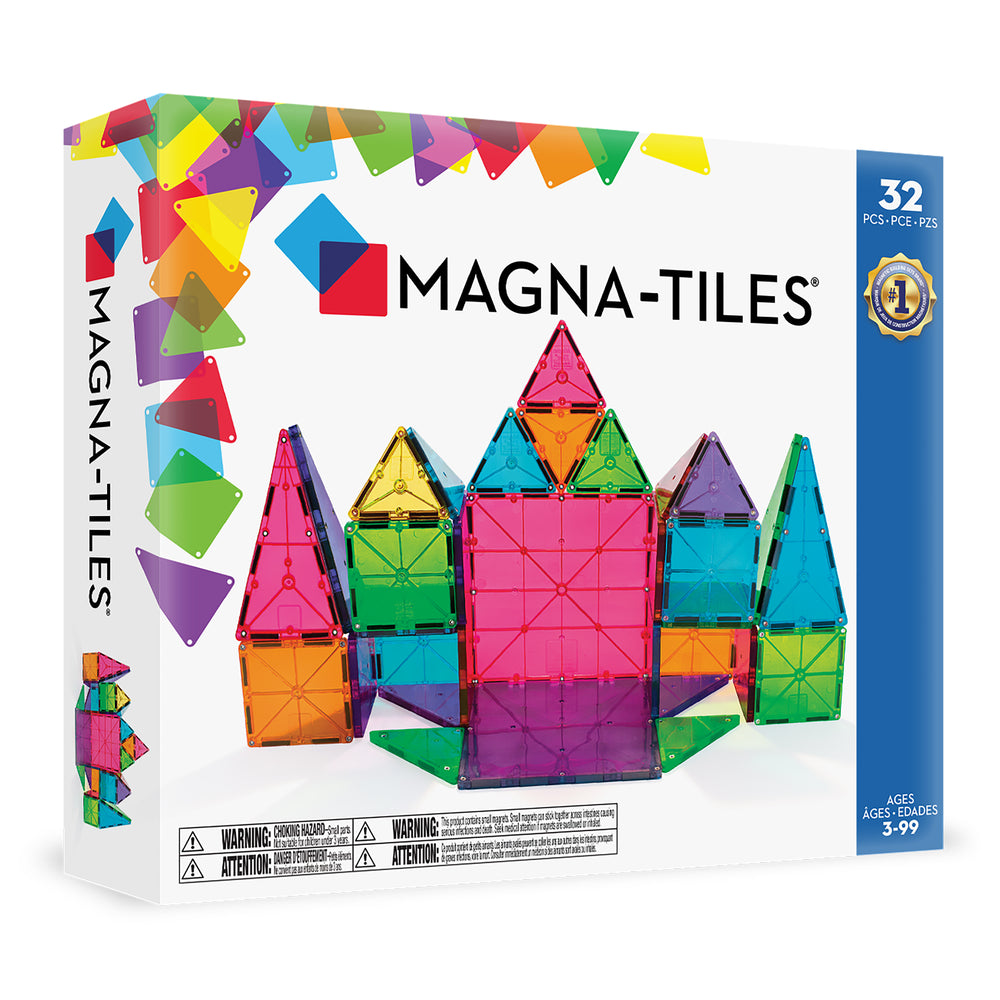
Magna-Tiles 32-Piece Clear Colors Set
Three-year-olds are a category entirely their own – explosive energy dynamos with complex internal stories, surprisingly precise physical coordination and a real appetite for open-ended challenges that don’t come with one correct answer. Attention spans have increased significantly. Play sessions that lasted 5 minutes at the age of one now lengthen to 20-30 minutes of concentrated attention when the toy is just right.
Gifts for this age group should lean heavily into open-ended creativity, advanced gross motor mastery, as well as the cooperative or parallel-imaginative play that forms the social foundation for preschool and kindergarten.
| Spec | Detail |
|---|---|
| Best Age | 3 years – 12+ years (genuinely grows with the child) |
| Piece Count | 32 pieces (squares and triangles) |
| Material | BPA-free, shatterproof plastic with magnetic edges |
| Key Features | Translucent colored tiles, strong magnetic edges, compatible with all expansions |
| Skills Developed | Geometry, spatial reasoning, open-ended creativity, STEM foundations |
| Approx. Price | ~$50–$70 |
| Buy Link | View on Magna-Tiles |
Advanced Gross Motor Skills
Strider 12 Sport Balance Bike
The Strider 12 Sport Balance Bike is the gold standard of pre-pedal cycling bikes for toddlers and its reputation is fully deserved. At a mere 6.7 pounds – incredibly light for a metal-framed bike – it’s one of the few balance bikes that actually doesn’t intimidate small riders who would have trouble manoeuvring heavier bikes.
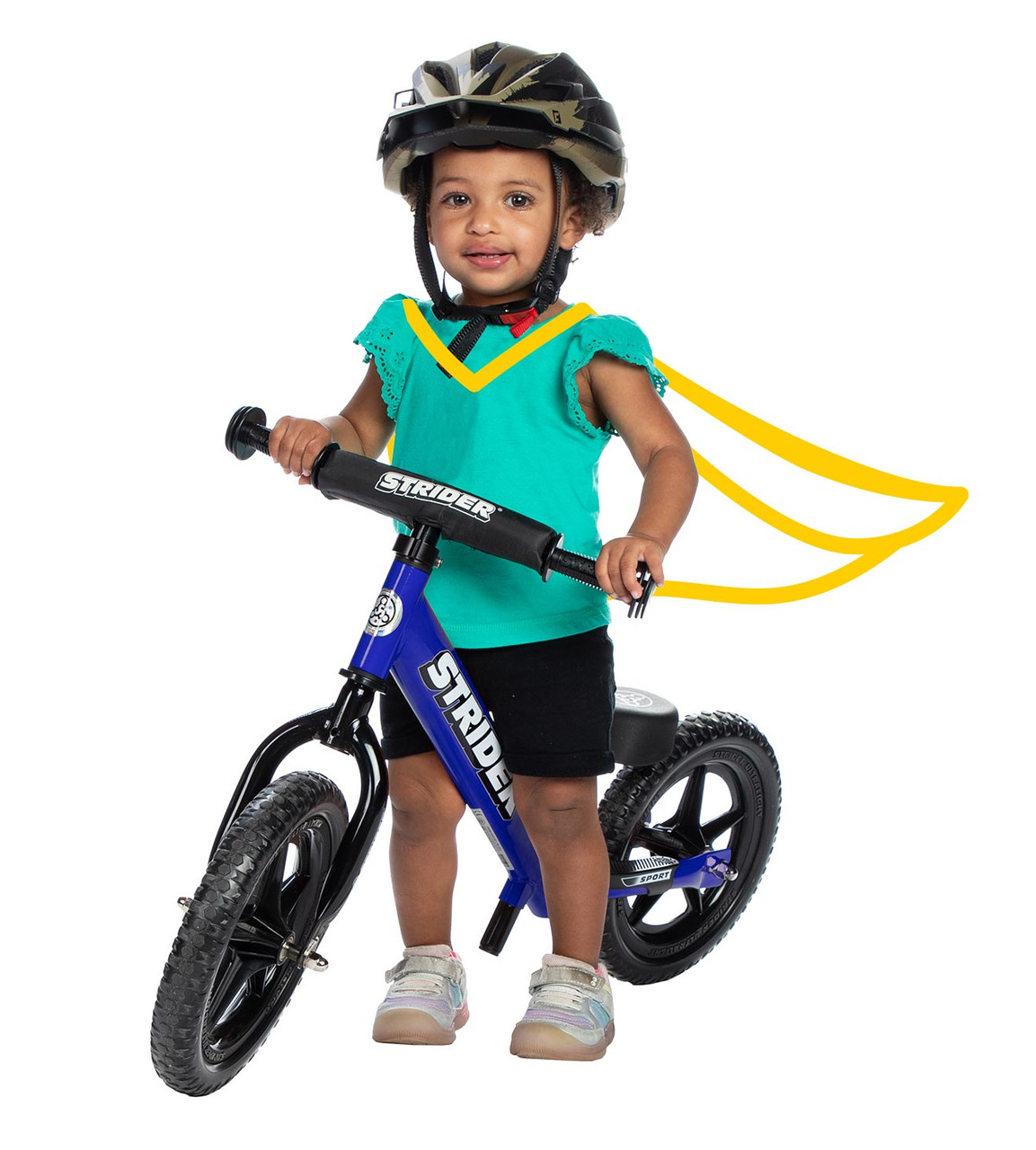
The adjustable seat (11-19 inches) makes this a product for children from 18 months to about age 5, making this a multi-year investment unlike a single season novelty. No-flat foam tires wipe out the fear of puncturing a tire, miniature handlebar grips fit the size of a toddler’s hands, and footrests give the sure-footed riders a place to perch during gliding. The balance skills being developed here translate directly into pedal bike riding with minimal or no training wheel period – a real developmental leap.
| Spec | Detail |
|---|---|
| Best Age | 18 months – 5 years |
| Weight | 6.7 lbs |
| Seat Height | Adjustable 11–19 inches |
| Tires | No-flat foam — zero puncture risk |
| Key Features | Mini grips, footrests, tool-free seat adjustment, lightweight frame |
| Skills Developed | Balance, core strength, coordination, spatial confidence |
| Approx. Price | ~$100–$120 |
| Buy Link | View on Strider |
Creative Arts and Crafts
Play-Doh Modeling Compound Starter Pack
At age 3 hands are strong enough and coordination is improved enough to gain real creative value from modeling clay — and Play-Doh’s Modeling Compound Starter Pack has been, after decades, the standard of the category. Ten bright non-toxic cans in 3-ounce sizes are just enough to produce ongoing creative sessions without the overwhelming amount that is a cleanup nightmare.
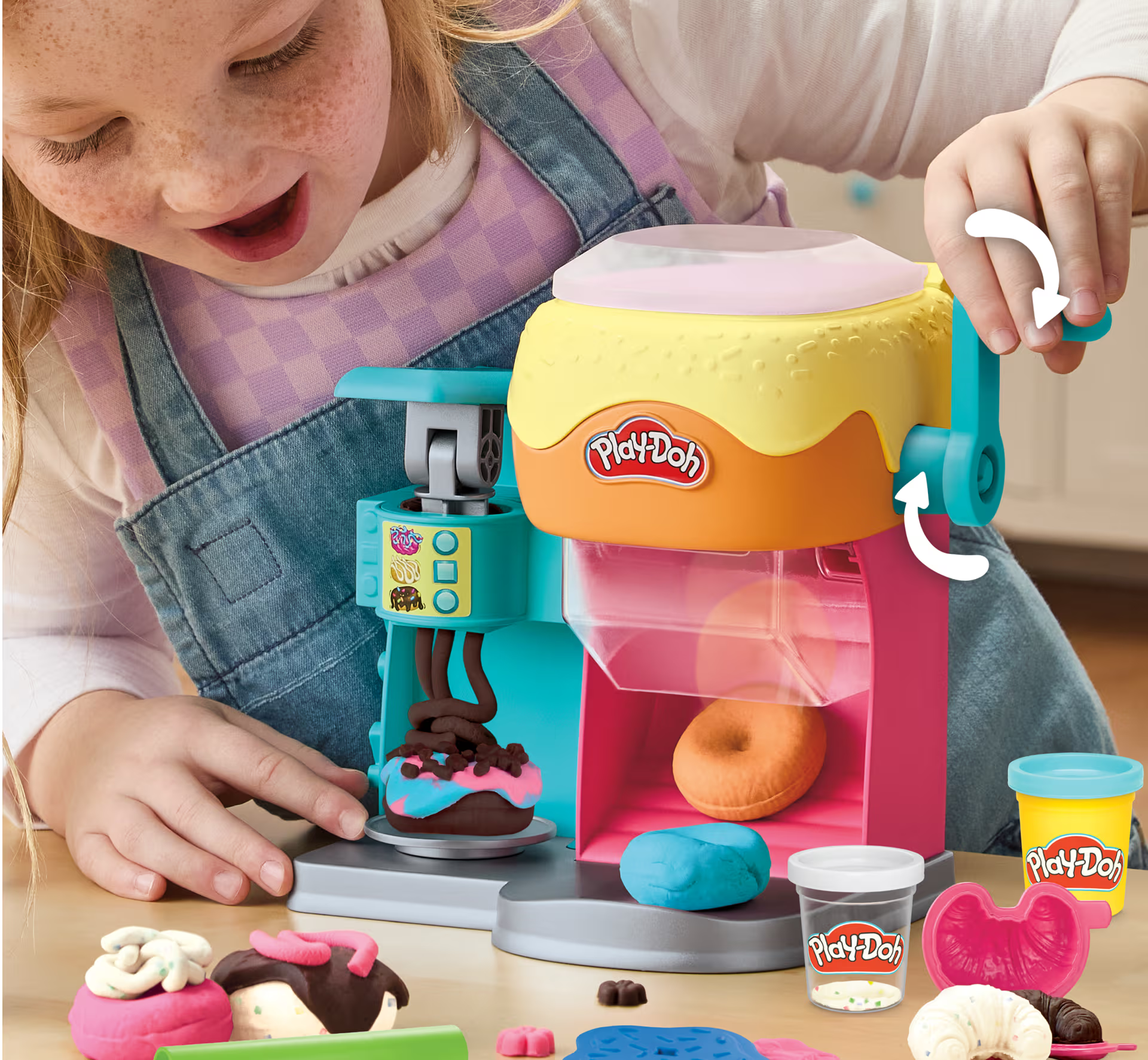
The sensory play in squeezing, rolling, flattening, and sculpting Play-Doh is building the very hand strength and fine motor acuity that supports handwriting readiness in the years to come – while as far as a child is concerned, he or she is just making dinosaurs and pizza. The compound is reusable, reliably non-toxic and comes in virtually unlimited color combinations to mix experiments that introduce color theory in a quiet way.
| Spec | Detail |
|---|---|
| Best Age | 3 years – 8 years |
| Contents | 10 cans × 3 oz each, various colors |
| Material | Non-toxic, reusable modeling compound |
| Key Features | Vibrant colors, soft and pliable texture, resealable cans |
| Skills Developed | Fine motor strength, creative expression, color mixing, storytelling |
| Approx. Price | ~$10–$15 |
| Buy Link | View on Hasbro Shop |
Complete Comparison: Top 10 Toddler Developmental Toys at a Glance
| Product | Target Age | Primary Skill | Secondary Skill | Battery Needed | Approx. Price | Buy Link |
|---|---|---|---|---|---|---|
| VTech Sit-to-Stand Walker | 9 mo – 2 yrs | Gross motor / walking | Early vocabulary | Yes | ~$40 | Amazon |
| Fat Brain InnyBin | 6 mo – 2 yrs | Fine motor / grasping | Tactile exploration | No | ~$35 | Fat Brain Toys |
| Jellycat Soft Cloth Books | 0 mo – 18 mo | Sensory exploration | Early literacy | No | ~$17 | Jellycat |
| Melissa & Doug Knob Puzzle | 12 mo – 3 yrs | Hand-eye coordination | Shape recognition | No | ~$15 | Melissa & Doug |
| LeapFrog Ice Cream Cart | 18 mo – 4 yrs | Pretend play | Memory / sequencing | Yes | ~$40 | LeapFrog |
| Mega Bloks Big Building Bag | 12 mo – 5 yrs | Spatial reasoning | Color sorting | No | ~$25 | Mattel Shop |
| Hape Pound & Tap Bench | 12 mo – 4 yrs | Cause-and-effect | Rhythm / music | No | ~$35 | Amazon |
| Magna-Tiles 32-Piece Set | 3 yrs – 12+ yrs | Geometry / STEM | Creative construction | No | ~$60 | Magna-Tiles |
| Strider 12 Sport Balance Bike | 18 mo – 5 yrs | Balance / gross motor | Core strength | No | ~$110 | Strider |
| Play-Doh Starter Pack | 3 yrs – 8 yrs | Fine motor strength | Creative expression | No | ~$12 | Hasbro Shop |
Choosing by Developmental Goal: Quick Reference Guide
If you know exactly which skill area you want to target, use this table to go straight to the right toy:
| Developmental Goal | Best Toy Pick | Age Range | Why It Works |
|---|---|---|---|
| Taking first steps | VTech Sit-to-Stand Walker | 9 mo – 2 yrs | Provides physical support and motivating distraction simultaneously |
| Building hand strength | Play-Doh Starter Pack | 3 yrs – 8 yrs | Squeezing and sculpting directly builds fine motor strength |
| Early reading love | Jellycat Soft Cloth Books | 0 – 18 months | Makes books feel tactile, fun, and rewarding before literacy begins |
| Problem-solving confidence | Melissa & Doug Knob Puzzle | 12 mo – 3 yrs | Immediate reward for correct placement builds positive learning loop |
| Spatial reasoning | Magna-Tiles 32-Piece Set | 3 yrs – 12+ | Open-ended 3D building with no wrong answers |
| Rhythm and music | Hape Pound & Tap Bench | 12 mo – 4 yrs | Physical pounding paired with immediate musical feedback |
| Role-play and empathy | LeapFrog Ice Cream Cart | 18 mo – 4 yrs | Serving others in play builds early social-emotional awareness |
| Physical confidence | Strider 12 Balance Bike | 18 mo – 5 yrs | Outdoor mastery builds self-confidence that transfers to all areas |
| Cooperative play | Mega Bloks Building Bag | 12 mo – 5 yrs | 80 pieces naturally invite building alongside others |
| Sensory learning | Fat Brain InnyBin | 6 mo – 2 yrs | Multi-texture pull-out design rewards tactile curiosity |
Frequently Asked Questions About Toddler Gifts
What makes the best gift for a 1-year-old boy or girl?
Universal appeal is very important at this age more than the female or male gender. The developmental needs of a 12 month old boy and girl are functionally identical – both benefit from sensory-rich, physically safe toys which target motor exploration and early cause and effect understanding. Push walkers, textured books, and simple knob puzzles hit these marks regardless of gender and the value of their long-term engagement is dramatic compared to any toy chosen for color or theme.
How do I choose a toy that grows with my child?
Look for three things: multiple modes of play (A toy that works differently at 18 months than 3 years), open-ended design (no one “finished” state or correct solution), and physical adjustability (like the seat height range of a Strider bike). Magna-Tiles and Mega Bloks are extraordinary examples – a 1 year old puts up two blocks; a 3 year old builds a castle with this same set of blocks.
| Growth Factor | What to Look For | Strong Examples |
|---|---|---|
| Multiple play modes | Toy functions change as skills advance | VTech Walker (sit → push), Hape Bench (hammer → play) |
| Open-ended design | No single correct answer or finished state | Magna-Tiles, Mega Bloks, Play-Doh |
| Physical adjustability | Size or configuration adapts as child grows | Strider Balance Bike (adjustable seat 11–19 inches) |
| Expandability | Base set grows with additional compatible pieces | Magna-Tiles (compatible with all expansion sets) |
Are electronic toys or wooden toys better for development?
Neither category is a winner all the time – it’s the quality of the play experience that is more important than the content. Wooden toys, in general, are excellent at providing a good level of tactile enrichment, open-ended creativity, and durability without the danger of over-stimulation with constant audio and visual rewards. Electronic toys, in the right hands, can be used to underscore vocabulary, introduce number concepts, or otherwise keep a child engaged in a way that is not possible with purely passive toys. The healthiest approach is to have a balance of both: a wooden puzzle and an interactive learning walker will give a toddler the full range of development input.
How many toys does a toddler actually need?
Research consistently shows that less, higher quality toys result in deeper and longer engagement than an overwhelming abundance of choices. A toddler given 3-5 meaningful toys at a time will normally play more imaginatively, concentrate more and develop better than a child who has 30 choices. Rotate toys in and out of storage every few weeks to restore the element of novelty without having to buy new toys.
Conclusion
From those first wobbly steps to elaborate pretend play scenarios involving ice cream shops and magnetic castles, the right toys at the right developmental stage are among the most powerful gifts you can give a toddler. They’re not merely entertainment – they’re the raw material of brain development, physical confidence, language acquisition and early social understanding.
The best choices are often not the most expensive or technologically impressive. They’re the toys that meet your child exactly where he’s at developmentally, are just challenging enough to be satisfying, but not defeating, and can withstand the kind of enthusiastic unsentimental destruction that toddlers are reliably capable of inflicting on everything they love.
Whether you’re shopping for a first birthday or a holiday or because your 2-year-old is ripping out their hair or you just got a revelation that a 2-year-old in your life needs something new – start with a specific developmental goal, select an appropriate age, and let the play do the rest. Every “I did it!” moment a well-chosen toy produces a real developmental step forward.